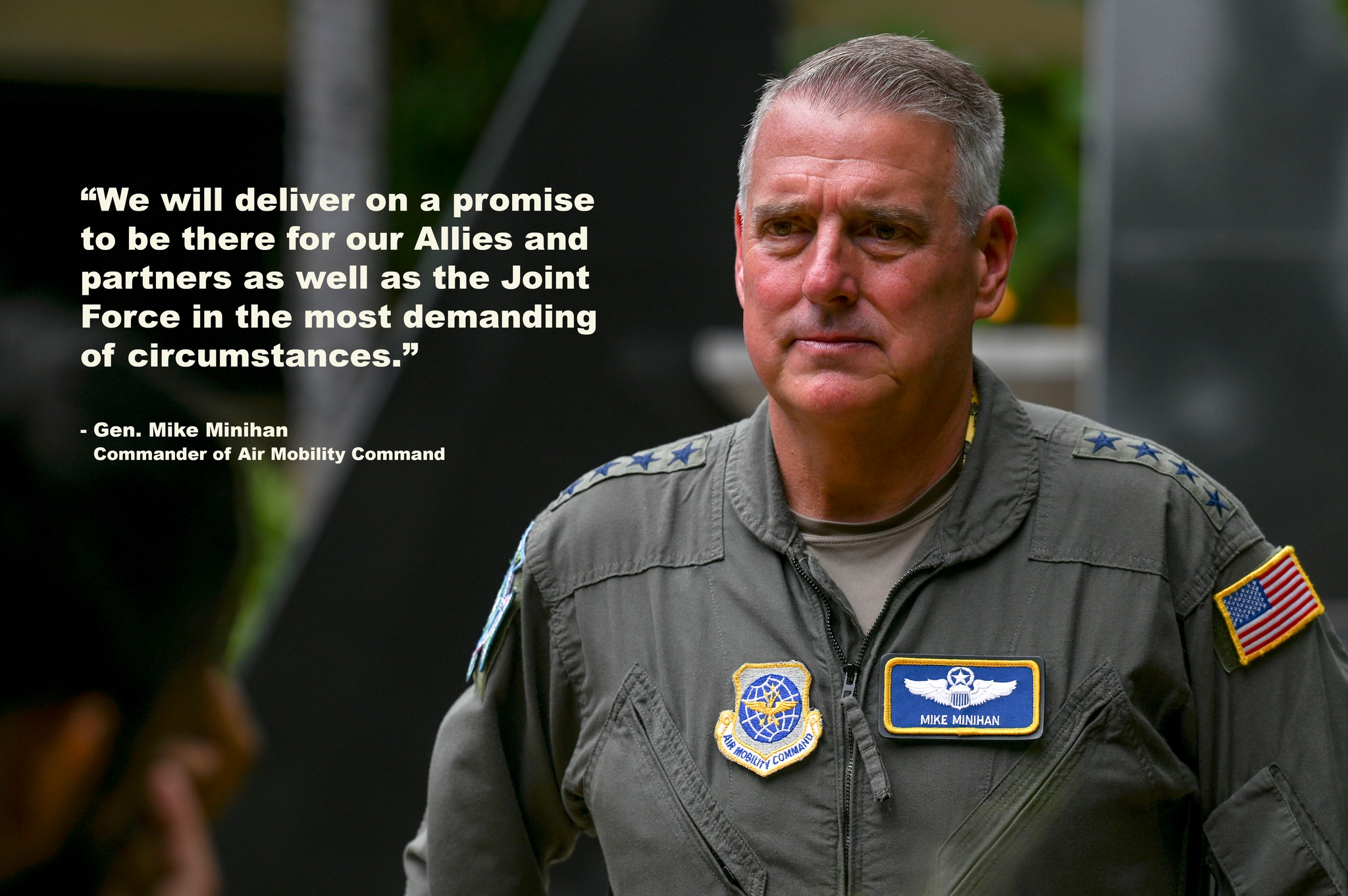
With General Michael Minihan stepping down as the commander of Air Mobility Command (AMC), the mantle now passes to the next leader, who will face the critical task of steering the Mobility Air Forces (MAF) through an era marked by rapid technological advancements, evolving global threats, and increased operational demands. This transition comes at a pivotal moment when the tenets outlined in “The Mobility Manifesto” are beginning to take root, requiring steadfast leadership to ensure their successful implementation. Here, we explore the key qualities and strategic imperatives necessary for the next AMC commander to effectively lead and advance the MAF, ensuring AMC remains relevant and enhances its maneuver capabilities for the joint force.
Strategic Vision and Continuity
The new commander must uphold and expand upon the strategic vision articulated in “The Mobility Manifesto.” This vision emphasizes agility, resilience, and innovation as core principles for future air mobility operations. Maintaining continuity with this strategic framework is essential to ensure that ongoing initiatives are not disrupted. However, the next leader should also be prepared to adapt and refine the strategy in response to new developments and insights, ensuring it remains relevant and effective.
According to the Department of Defense’s National Defense Strategy, maintaining strategic continuity while adapting to new challenges is crucial for operational effectiveness (DoD, 2018). This approach ensures that the MAF remains agile and capable of responding to a rapidly changing security environment.
Technological Integration and Innovation
A crucial aspect of the next commander’s role will be driving technological integration and innovation within the MAF. This includes:
- Embracing Advanced Technologies: The commander must prioritize the integration of artificial intelligence (AI), autonomous systems, and advanced logistics solutions to enhance operational capabilities. By fostering a culture of innovation, the leader can ensure that the MAF remains at the forefront of technological advancements.
- Cybersecurity and Information Warfare: In an increasingly digital battlefield, the new commander must emphasize robust cybersecurity measures and effective information warfare strategies to protect critical systems and maintain operational integrity.
The integration of AI and autonomous systems is pivotal, as highlighted by Scharre (2018) in “Army of None: Autonomous Weapons and the Future of War.” The future of warfare will be heavily influenced by these technologies, and the MAF must stay ahead of adversaries in their deployment and utilization.
Operational Readiness and Resilience
Ensuring the operational readiness and resilience of air mobility forces is another key responsibility. The new commander must:
- Enhance Training Programs: Update and expand training programs to incorporate new technologies and operational concepts, ensuring that personnel are well-prepared for diverse and complex missions.
- Focus on Survivability: Implement measures to improve the survivability of air mobility assets in contested environments. This includes hardening airbases, enhancing aircraft defenses, and developing alternative basing options to mitigate threats.
- Adaptability and Flexibility: Promote adaptability and flexibility within the force structure, enabling rapid responses to evolving threats and operational requirements.
The importance of readiness and resilience is emphasized by the RAND Corporation, which underscores that well-prepared and adaptable forces are essential for maintaining operational effectiveness in dynamic and contested environments (Cohen, 2017).
Strengthening Partnerships and Interoperability
The new leader must strengthen partnerships with allied forces and industry stakeholders to enhance interoperability and collaboration. This involves:
- Joint and Coalition Operations: Continue to prioritize interoperability with allied forces, ensuring seamless integration and coordination during joint and coalition operations.
- Industry Collaboration: Foster strong relationships with industry partners to accelerate the development and deployment of innovative solutions and technologies.
Interoperability and strong alliances are critical for effective joint operations, as detailed by Gompert, Cevallos, and Garafola (2016) in their analysis of U.S. military strategy and its dependence on coalition partners.
Strategic Communication and Leadership
Effective strategic communication and leadership are paramount for the new commander. This includes:
- Articulating the Vision: Clearly communicate the strategic vision and operational priorities to all stakeholders, ensuring alignment and understanding across the command.
- Building Trust and Morale: Inspire confidence and build trust within the ranks by demonstrating strong leadership, transparency, and a commitment to the welfare of personnel.
Building trust and morale is vital for operational success. McChrystal (2015), in “Team of Teams,” highlights the importance of leadership in fostering a cohesive and motivated force capable of achieving complex missions.
Navigating Geopolitical Challenges
The global security environment is becoming increasingly complex, with great power competition and regional conflicts posing significant challenges. The new commander must:
- Assess and Mitigate Risks: Continuously assess the geopolitical landscape to identify emerging threats and opportunities. Implement strategies to mitigate risks and capitalize on opportunities to enhance U.S. strategic positioning.
- Flexibility in Strategy: Maintain a flexible strategic approach that can adapt to shifting geopolitical dynamics, ensuring that the MAF can effectively support national defense objectives.
The necessity of flexibility in strategy is underscored by Krepinevich (2009) in “7 Deadly Scenarios,” where he emphasizes the unpredictable nature of modern conflicts and the need for adaptive military strategies.
Enhancing AMC’s Relevance and Maneuver Capabilities
To ensure AMC remains relevant and enhances its maneuver capabilities for the joint force, the next commander should focus on several key areas:
- Global Mobility: Strengthen AMC’s global mobility capabilities to ensure rapid deployment and sustainment of forces across the globe. This includes enhancing airlift, aerial refueling, and aeromedical evacuation capabilities.
- Agile Combat Support: Develop agile combat support frameworks that can quickly adapt to changing operational requirements. This includes prepositioning equipment, improving logistics networks, and streamlining supply chains.
- Force Projection: Enhance the ability to project power in contested environments through innovative operational concepts and advanced technologies. This includes integrating multi-domain operations and improving situational awareness through advanced sensors and intelligence capabilities.
Clark (2020) emphasizes the importance of agility and innovation in defense strategy, highlighting how these elements are crucial for maintaining a competitive edge and effective force projection.
Conclusion
The next commander of Air Mobility Command will play a pivotal role in shaping the future of the Mobility Air Forces. By upholding and expanding upon the strategic vision outlined in “The Mobility Manifesto,” embracing technological innovation, ensuring operational readiness and resilience, strengthening partnerships, and demonstrating effective leadership, the new commander can successfully navigate the challenges ahead. This leadership transition represents a critical opportunity to build on the progress made under General Minihan and continue driving the MAF towards a future characterized by agility, resilience, and technological superiority. The strategic priorities and operational imperatives outlined in this analysis will be essential for ensuring that AMC remains a critical maneuver capability for the joint force, capable of meeting the demands of the 21st-century security environment.